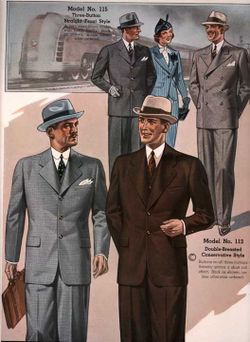
Other Men's Clothing
Clothing is defined, in its broadest sense, as coverings for the torso and limbs as well as coverings for the hands (gloves), feet (socks, shoes, sandals, boots) and head (hats, caps). more...
Humans nearly universally wear clothing, which is also known as dress, garments, attire, or apparel. People wear clothing for functional as well as for social reasons. Clothing protects the vulnerable nude human body from the extremes of weather and other features of our environment. But every article of clothing also carries a cultural and social meaning.
Humans also decorate their bodies with makeup or cosmetics, perfume, and other ornamentation; they also cut, dye, and arrange the hair of their heads, faces, and bodies (see hairstyle), and sometimes also mark their skin (by tattoos, scarifications, and piercings). All these decorations contribute to the overall effect and message of clothing, but do not constitute clothing per se.
Articles carried rather than worn (such as purses, canes, and umbrellas) are normally counted as fashion accessories rather than as clothing. Jewelry and eyeglasses are usually counted as accessories as well, even though in common speech these items are described as being worn rather than carried.
Clothing as functional technology
The practical function of clothing is to protect the human body from weather — strong sunlight, extreme heat or cold, and precipitation — as well as protect from insects, noxious chemicals, weapons, and contact with abrasive substances. In sum, clothing protects against anything that might injure the naked human body. Humans have shown extreme inventiveness in devising clothing solutions to practical problems.
Read more at Wikipedia.org